The Wool Wire | July 17, 2025
The growing push for regional fiber systems, plus woolpresses, wool walls and ceilings, and wooly final resting places.


News snippets from the wool world
Hello, my friends,
If you're looking to expand your summer reading, I wanted to let you know about a new newsletter from Erin Dorf. Members of the Foundation Flock may remember her from our interview a few years ago.
Erin is a fourth-generation wool trader whose family business, Anodyne Wool, is one of the United States' largest exporters of American wool.
In addition to knowing a thing or two about wool, Erin was also an English major in college. She has a lot to say about wool, and she knows how to say it.
I want this space to be a conversation. I have a very niche perspective and worldview—I see and write about things you won’t find elsewhere. I hope that’s enough to attract a thoughtful audience with a craving for complexity to match my own—and I intend to do my part to make that happen.
You can check out her newsletter, Locavore's Closet, on Substack.
Towards a natural, regional future
As overwhelming as fast fashion can be, I'm heartened by the growing number of groups pushing to rebuild a regional natural fiber infrastructure.
Here in the United States, I told you about the formation of the Northeast Fiber Exchange back in January. The news was so fresh that they didn't even have a webpage. Now you can read all about the regional fiber exchange they're creating—how it works, what their goals are, and what the prices and policies are for selling and buying.
 Skip to Content
Ohio gets the ball rolling
And in the Midwest, I enjoyed reading about a Farm to Fashion event that took place at Ohio State University this spring. The goal was to start a conversation about what would be involved in rebuilding a domestic natural textiles supply chain in the United States—and why it's important.
Driving the movement is this chilling fact:
In the 1960s, 95% of apparel worn in the United States was made domestically. By the end of the 20th century, that number dropped to 29%. Today, only 2% of clothing is made in the U.S., according to the U.S. Bureau of Labor Statistics, mostly due to lower labor and material costs in other countries.
Kudos to the event organizers and participants for getting the ball rolling.
 Liz Partsch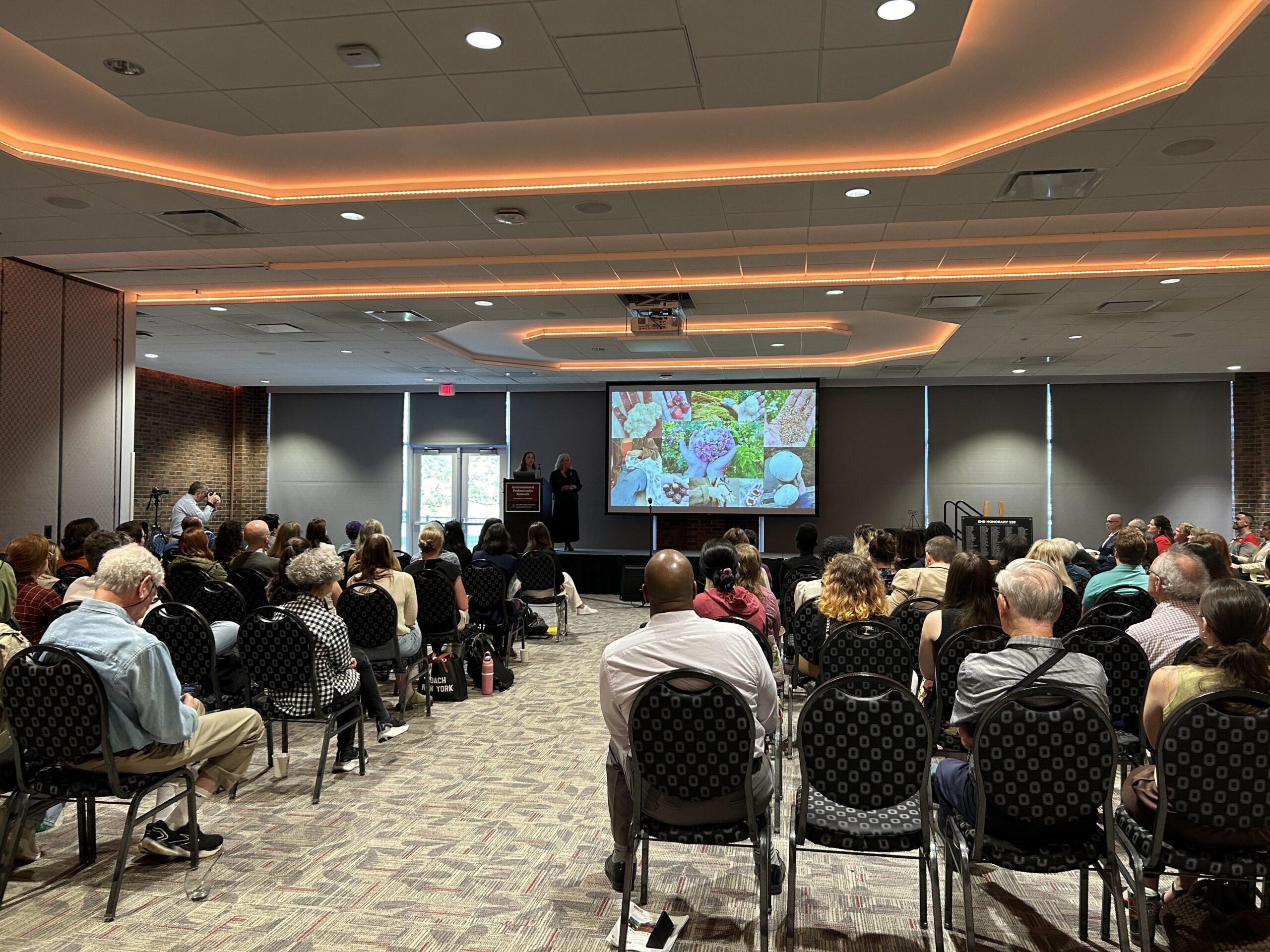
Talk about Im-Pressive
We talk about a lot of wooly things here. But how often have we talked about woolpresses? So rarely that my spellcheck doesn't even know that it's one word. (It is.)
The woolpress is an absolutely critical component of the wool supply chain. Costing upwards of $10,000, this mighty machine turns heaps of fleece into tidy blocks that can be easily shipped and stored.
I enjoyed reading this article that pays tribute to one New Zealand woolpress in particular. There's interesting history in here too.
 Nigel Malthus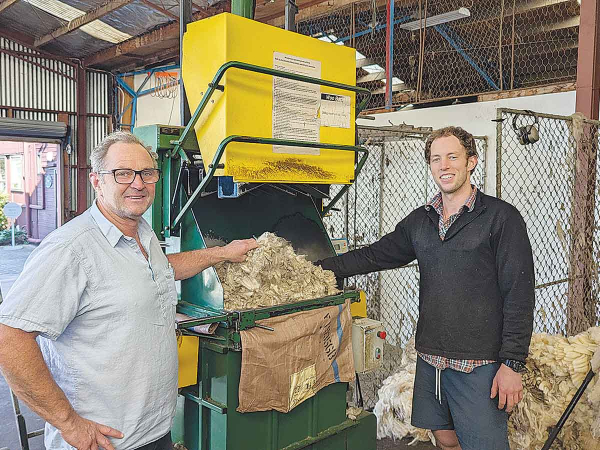
Floc keeps moving
Still in New Zealand, I have a follow-up about Floc, the wool acoustic wall and ceiling panel maker I told you about in February.. I'm happy to report that the idea behind Floc is gaining traction—and with it comes a potential boost for New Zealand's struggling strongwool market.
The New Zealand Herald recently profiled Floc and the family business behind it, T&R Interior Systems. I enjoyed reading about the years of work they've put into this and their hopes for the future. This had to be my favorite sentence from the piece:
“We are targeting four walls and a ceiling,” Tom O’Sullivan, Floc‘s business development manager, said.
Most people consider New Zealand's strongwool suited for carpets. I'd be more than happy to have wool on all four of my walls and my ceiling. Apparently all you have to do is peel off the back of the panels and stick them onto your wall, like wallpaper. But, in this case, I suppose I should call it "woolpaper."
 Kem Ormond
Still tempted!
Rest in fleece
Another growing market for New Zealand strongwool is as a very natural, biodegradable, and beautiful final resting place. Here's a profile of Natural Legacy by Hainsworth, a company innovating with wool coffins and urns.


As an added benefit, there's no need to worry about itch or prickle, right?
On that note, I'll show myself out.
Thanks as always for your readership and your support.
Until next time,
Clara

The Wool Channel Newsletter
Join the newsletter to receive the latest updates in your inbox.


