The Wool Wire | November 13, 2026
A new way of measuring methane, keeping track of chemical footprints, wool pens, hot water bottle update, steady growth in the U.S., and a profile of Center of the Nation Wool


News snippets from the wool world
Hello, my friends,
It's getting colder here in New England. Even my brother, who is notorious for keeping his house so cold that we wear jackets when visiting, confessed to turning on his boiler last night.
At the same time, astronomical heating costs are forcing people to face tough decisions. In years past, I've kept the thermostat down by keeping a small space heater nearby. But this year, I'm taking a different approach.
A few weeks ago I told you about a sheepskin hot water bottle cover from the UK clothing and housewares company Toast. (No affiliation, though if they wanted to send me a lifetime supply of hot water bottle covers I wouldn't complain.)
What I didn't tell you is that I succumbed—in the name of science, mind you—and ordered one.
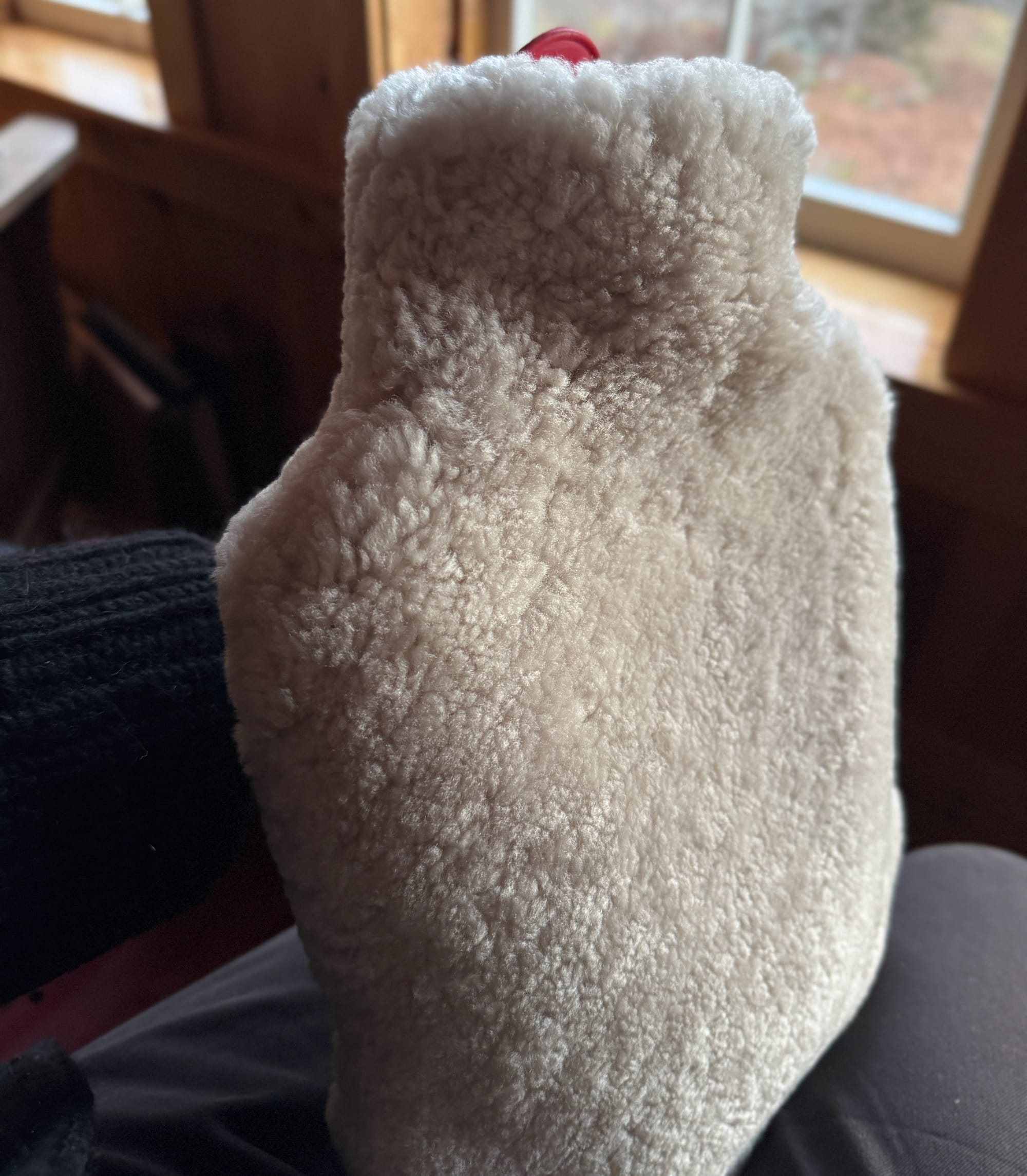
My initial report after carrying this around like a baby for the last week? It's marvelous. The fleece lends a soft, dispersed heat to the heft of the water bottle, almost like a sleeping cat. I can fill it, set it on my lap, cover us both with a small wool throw, and feel its quiet warmth for hours.
Note that the Toast fleece cover doesn't come with the actual hot water bottle. Boston General Store carries the good ones from Sänger, as well as recycled wool covers in tweed solids and stripes if fleece isn't your thing.
Pen Pals
What do you get the wool-wearing pen lover who has everything? If your budget is generous, how about a wool pen?
I have to admit, this is a first. This limited series of fountain pens and rollerball pens comes from British pen maker Tom's Studio. They collaborated with SolidWool, producers of a novel composite material that's rather like fiberglass but composed entirely of British wool and a bio-resin.
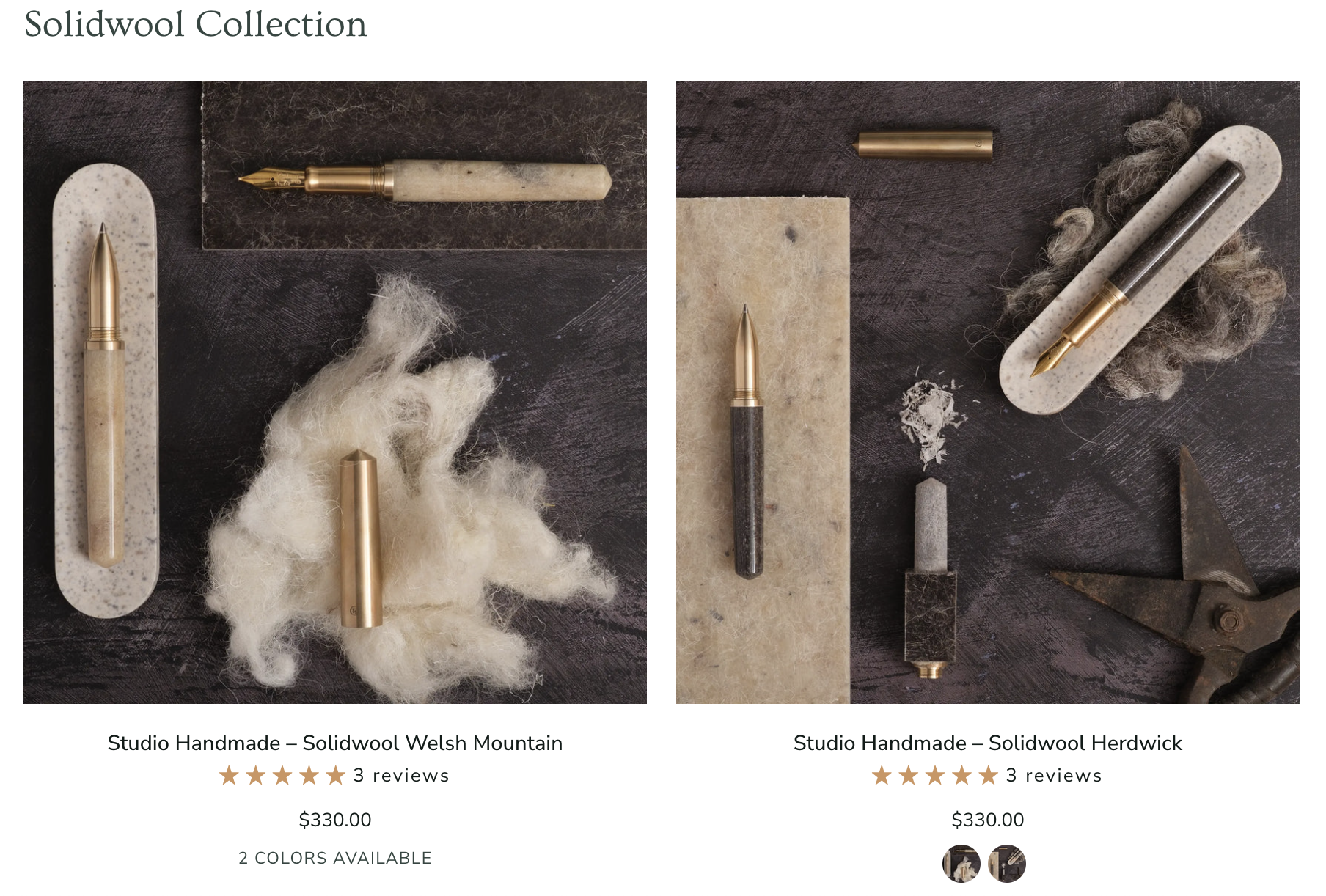
The pens come in two breeds—a creamy Welsh Mountain and a gunmetal grey Herdwick. The wool fibers bring structure and strength to the bio-resin material, although you'll still have to wear mittens if you need to keep your hands warm.
On second thought, I wonder if anyone makes hot water bottles for hands?
Measuring Methane
This next story reads like a detective novel, with methane being the key character. Every wool fiber carries the story of its origins—revealing hints about everything from genetics to climate, grazing conditions, time of lambing, stress, and nutrition.
But at a time when climate change is front and center in our minds, there's one more thing we need to know: How much methane did that sheep produce while growing the wool? Since methane is a key contributor to climate change, the need for numbers is real.
Until now, scientists measured methane by placing each sheep in a small tent, bribing it with yummy treats, and then measuring the sheep's burps. Which is fine for research but far too impractical for large-scale operations.
Friends, we've had a breakthrough. And it took a paleoclimatologist to figure it out.
The key is carbon isotopes. As wool grows, carbon from the animal's metabolism is laid down into the fiber. When a sheep produces less methane, it retains more of the lighter carbon isotopes—and that shift is preserved in the wool itself. No farm visit required. No connectivity, no equipment, no snapshot. Just a sample, sent to a lab, read at any point down the supply chain.
We've already figured out how we can reduce a sheep's methane emissions by making changes to their diet. Now, we have an easy way to measure just how much methane has been eliminated. No tents or treats required.
 Smriti Daniel
Our clothes have a chemical footprint, too
This next story offers a helpful reminder that there's more to clothing than mere fiber. A label will give us a garment's fiber contents, but most labels stop there. We rarely get insight into what was done to those fibers before the garment reached us.
Each step, treatment, and process carries its own potential chemical footprint and consequences.
Fibres may be bleached, dyed, softened, strengthened or waterproofed. Some are treated to make them flame retardant or resistant to creasing, staining and microbial growth. These treatments help create the products consumers have come to expect, improving appearance, durability and performance. But they also influence how textiles behave throughout their life cycle. This affects how they degrade, what they release into the environment and how easily they can be recycled.
Obviously, opting for natural fibers over petroleum-derived ones is an excellent start, but there's ample reason to dig deeper, too.
 Charlotte Barras
Steady is good
The U.S. wool market may not be growing on par with the NASDAQ but, according to one market research study, it is projected to grow 4.1% annually, hitting $580.6 million by 2033. The report suggests this growth is being driven by a rising demand for sustainable, premium natural fibers.
Wool’s credentials as a renewable, biodegradable and recyclable fiber are increasingly quantified by the International Wool Textile Organisation (IWTO), which highlights that roughly 50% of wool’s weight is organic carbon, that wool products have long lifespans, and that around 6% of the total wool market is already recycled—far higher than most fibers. Wool also biodegrades readily on land and in water and does not contribute to microplastic pollution, which aligns with tightening regulations on synthetic fiber shedding.
I was interested to see automotive textiles listed as a growing market segment. They say this reflects rising demand for natural fiber upholstery and interiors in EVs and premium models.
If you're curious, here's the full report.
Where there's a wool there's a warehouse
Generally speaking, wool warehouses tend not to be nearly as sexy as mills or dyehouses and the like. But without them, ranchers would have nowhere to send their clip in hopes of finding a buyer. They are a vital link in the chain.
One such warehouse is Center of the Nation Wool in Belle Fourche, South Dakota. Nearly 20% of the wool grown in this country moves through this warehouse, and its CEO, Larry Prager, is an absolute legend.
I savor any chance to hear what he has to say, and this article did not disappoint.
Prager traveled to China with a party of half a dozen American wool warehouse operators on a business trip. The warehousemen met with some of the “big dogs” in global textile production.
“We sit down in a room full of Chinese textile groups,” Prager recalled. “When they found out I was from Belle Fourche, you could see them just turn around and focus on me.”
As well they should!
On that note, I'll let you go. Thanks, as always, for your readership and your support.
Until next time,
Clara

The Wool Channel Newsletter
Join the newsletter to receive the latest updates in your inbox.