
The Wool Wire | October 23, 2025
Transhumance time! Plus, scouring in the United States, Australia, and Portugal, an Irish study, investing in science, and honoring wool tennis balls.


News snippets from the wool world
Hello, my friends!
Autumn is historically the time when sheep are moved from their summer grazing land to winter pastures—an ancient practice called transhumance. While transhumance isn't practiced as much now, it hasn't disappeared completely.
Earlier this month, you could've watched 1,500 sheep walk through downtown Ketchum, Idaho, as part of the 30th annual Trailing of the Sheep festival. And in Spain, where sheep have moved up and down the Iberian peninsula since pre-Roman times, the Fiesta de la Transhumancia took place last weekend. Curious what it looked like? Here are some gorgeous photos by Manu Fernandez for the Associated Press—as well as a more candid video from a bystander.
The struggle to scour
While some handspinners and fiber-artists enjoy working "in the grease," aka with fleece straight off the sheep, it's challenging. Scouring that greasy wool is generally considered the most important first step in transforming a sheep's coat into anything else. Which makes this next bit of news troubling.
Australia's wool clip is at its lowest in more than a century. China purchases up to 90% of that wool, and most of it is processed in China. Australia had just two commercial scouring plants operating at half capacity until September, when the two plants merged and the the Victoria plant closed. Now, just one facility remains for all of Australia's domestic wool scouring needs.
 Courtesy of EP Robinson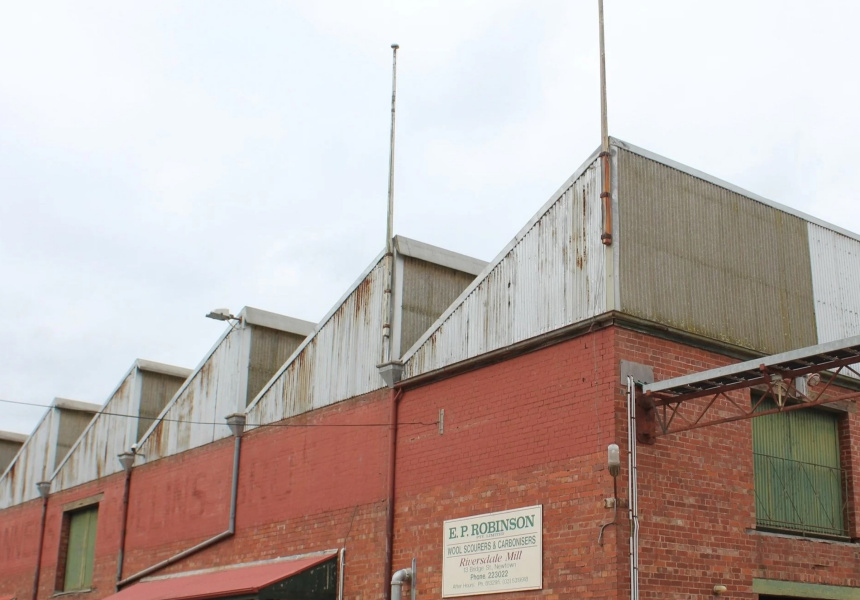
Pleading in Portugal
Portugal hasn't been quite so lucky. Over the summer, after problems with wastewater processing permits, Portugal's last commercial-scale wool scouring plant in Guarda was forced to stop scouring.
A petition is circulating to force a discussion of this issue in parliament, which would require 7,500 signatures. (Before you race over to sign it, like I did, know that the petition is for Portuguese citizens only.)
Fortunately, the petition now has 8,108 signatures and counting. Fingers crossed everyone takes this seriously and they find a solution so that the plant can reopen.
This article does a great job of explaining the deeper issues surrounding Portugal's wool industry—and it includes insightful words from Portuguese yarn visionary Rosa Pomar.
Bolstering what's left in the US
Meanwhile, we should feel lucky that the United States has two commercial-scale scouring plants left. But for a stable supply chain, two is still too few. Earlier this year, the American Sheep Industry Association's Wool Council presented findings from a study conducted the previous year, including noting our scouring weakness, and shared a Wool Action Plan to spur growth.
A core part of the plan includes $300,000 in grants to strengthen our wool processing infrastructure, improve marketing efforts, and boost data integration to ensure traceability. Yes, I realize that if a single mill can cost anywhere from $500,000 to tens of millions of dollars, $300,000 can only do so much. But with an annual budget of just over $1 million, this represents a huge investment for the American Sheep Industry Association.
The report also laid out where our wool goes, which I found particularly interesting. In 2024, U.S. sheep produced 22 million pounds of wool. Some 60% of it was exported to China, 15% was acquired by the Department of Defense, 19% was purchased by our large domestic commercial mills, and 6% went to smaller mills like the ones that produce much of our yarn.
It's encouraging to see this smaller market segment recognized. With our help, and with some of that grant money, that segment has the potential to grow.
Building on Ireland's wool
Ireland, too, has been working on strengthening its wool industry, which produces 15 million pounds of wool annually. A three-year Regenerative Value Systems for Irish Grown Wool in Ireland project began this spring, after securing a whopping €657,403 in funding (roughly $760,000).
 James Hanly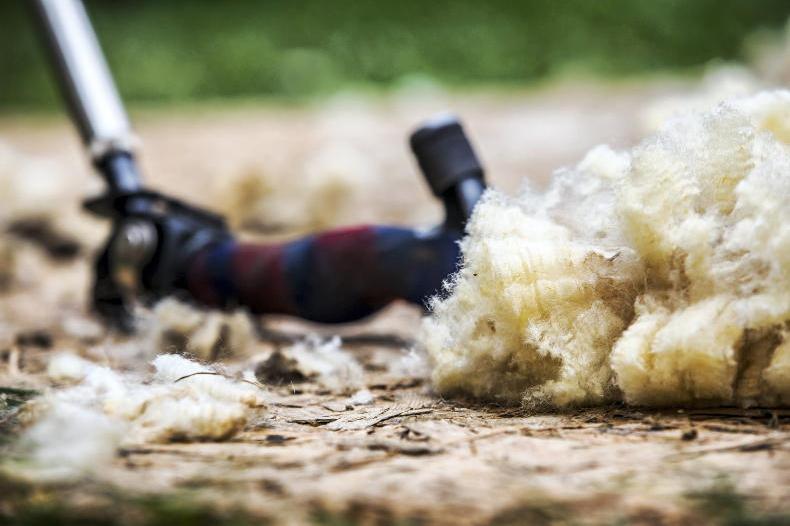
Successful political lobbying requires solid data—and to get data, you need to conduct research, which requires funding. Until now, Ireland has relied on data coming from Australia. This project should give them a much clearer position from which to advocate for the unique opportunities provided by their own wool.
And speaking of the unique qualities of Irish tool, this summer the Galway Wool Co-Op announced a business partnership with Avoca Woolen Mills. Their hope is that, by tweaking their processing techniques, they can expand the suitability of Ireland's native sheep for clothing, accessories, tweed, and interior textiles.
 Caroline Allen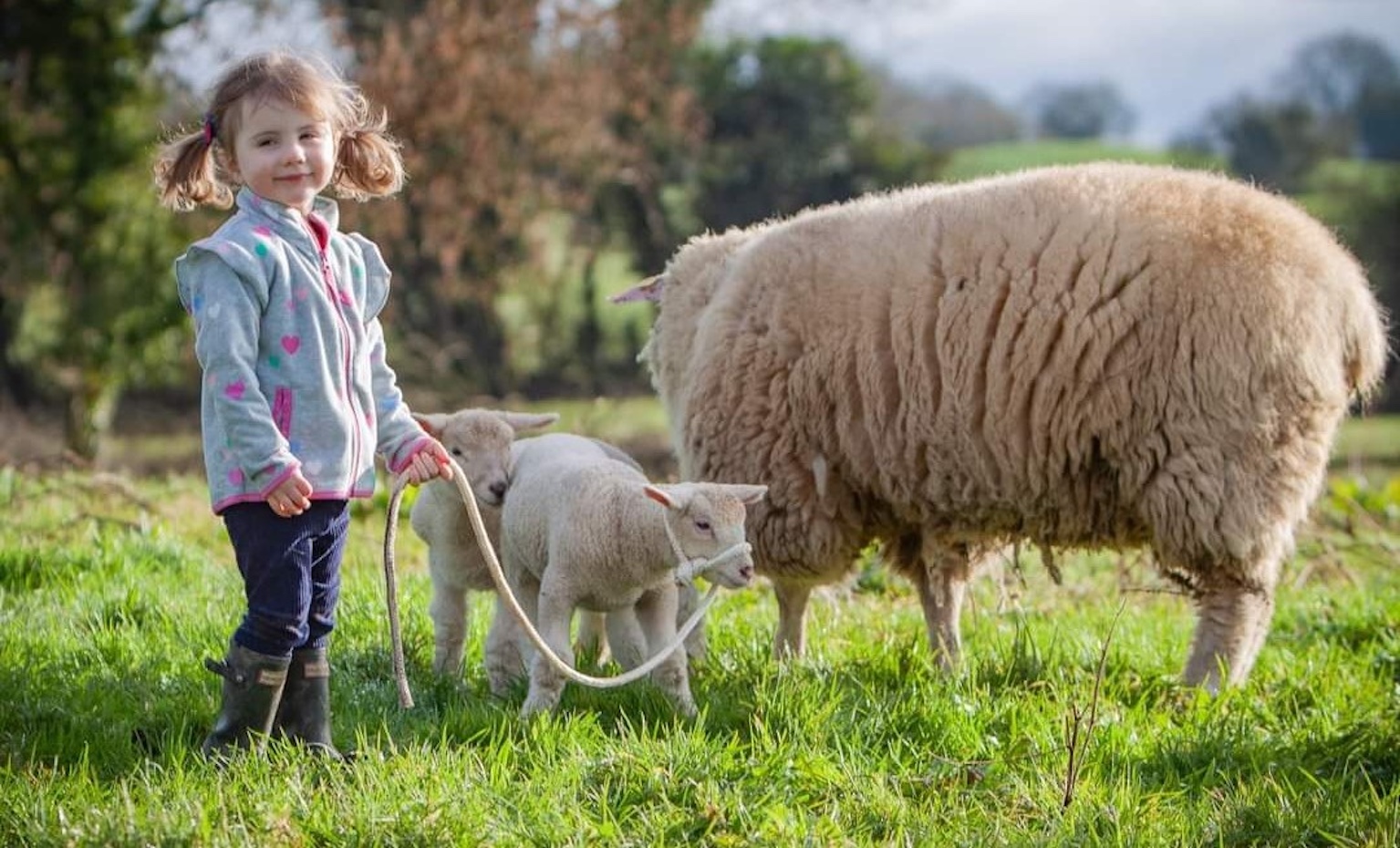
Invest in research, let the facts market themselves
Still on the subject of science, here's a really interesting article about why investments in science, rather than marketing, have the most potential to turn things around for wool right now. It heavily quotes former Australian Wool Innovation research manager Dr. Paul Swan, who has played a key role in helping redefine the environmental impact of wool—pivotal at a time when the Higg Index initially gave polyester a lighter carbon footprint than wool.
He challenges the current environmental and carbon accounting methods for sheep and cows, suggesting they fail to take into account the soil after the grazing animals have moved on. And that if we did, we'd discover “you actually end up with more carbon being drawn down than we emit.”
 Terry Sim
Dr. Swan's entire presentation at this year's IWTO Conference is now available on YouTube, if you'd like to see and hear from him yourself.
Tennis, anyone?
And finally, let's pay homage to the humble New Zealand sheep farms whose wool goes into premium tennis balls—including those just played at this year's U.S. Open.
To make each ball the crossbred wool is blended with synthetic thread wrapped around a rubber core. Wool predominantly off the back of the Romneys of 32 to 36 microns is the perfect tool in the fiercest of rallies.
Rosstan Mazey, chief executive of WoolWorks Ventures, said last year around 3000 tonnes of the country's wool was exported for tennis ball felt.
 Penny Miles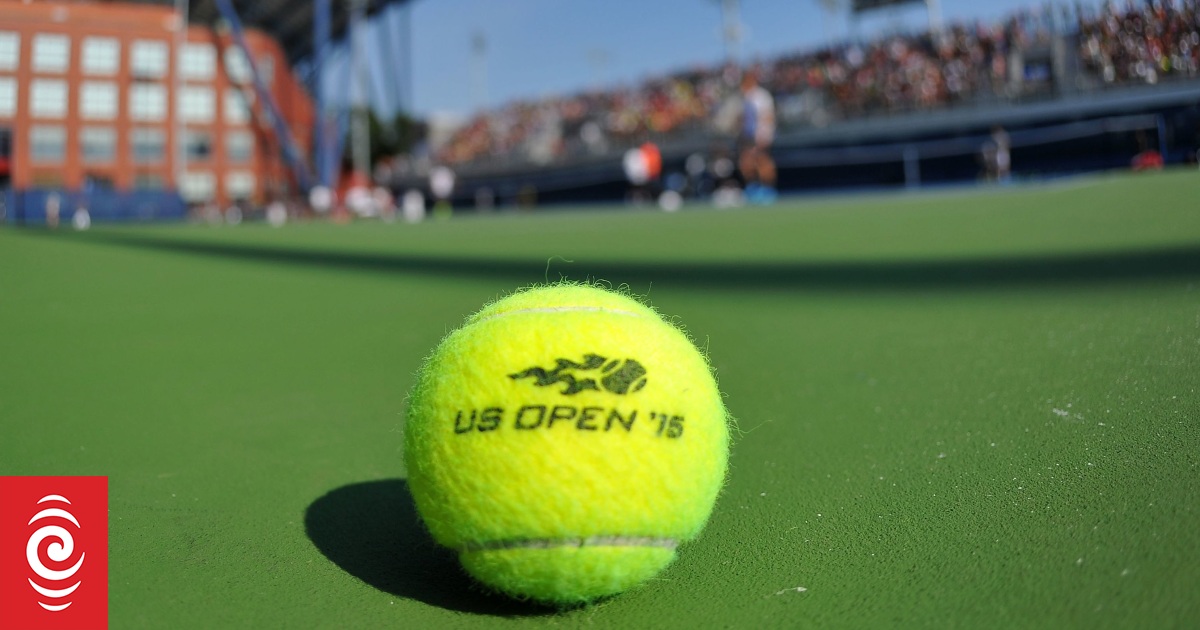
Love!
On that note, I'll let you go.
Thanks, as always, for your readership and your support.
Until next time,
Clara

The Wool Channel Newsletter
Join the newsletter to receive the latest updates in your inbox.


