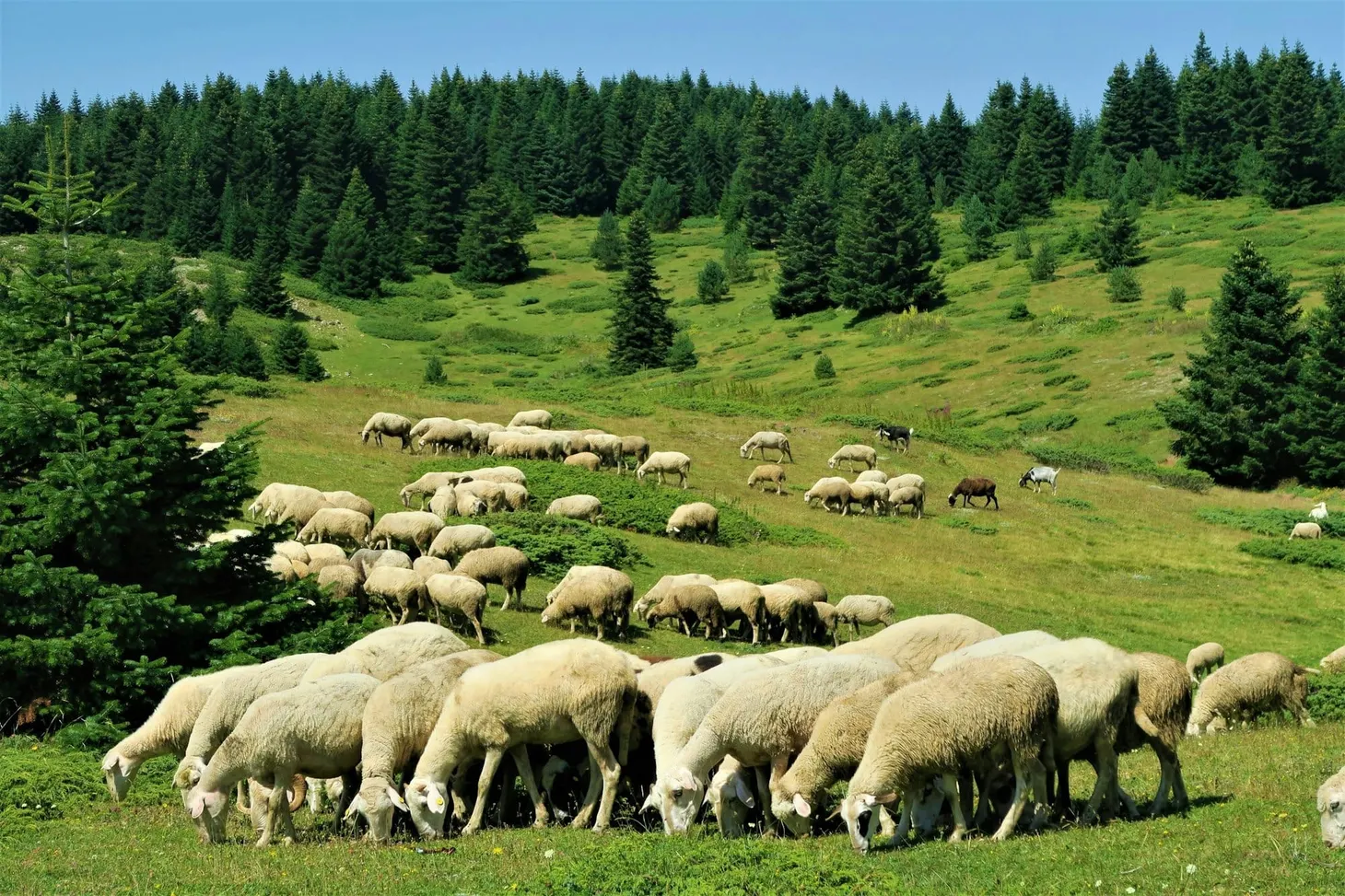
The Wool Wire | July 9, 2026
Regenerative fibers, keratin for bone repair, saving ourselves (and Irish wool) through knitting, watching wool decompose, and solar grazing in action


News snippets from the wool world
Hello, my friends,
You've heard me say that wool has the potential to save us. But since that ends up sounding a bit woo woo, I'm always on the lookout for tangible examples of what I mean. This week's newsletter is full of them.
Since saving is about rebuilding, let's start with the notion of "regenerative fiber." What does that even mean? Here's a helpful article that sets out the foundational ideas behind the concept. It offers an overview of what the word "regenerative" could mean to the textiles industry in terms of cotton, hemp, flax, and wool—and provides a fair assessment of the challenges.
Regenerative fibers represent a powerful shift in the textile industry’s approach to sustainability. Instead of focusing only on reducing environmental damage, regenerative systems aim to rebuild ecosystems and support climate solutions. While challenges remain in scaling these practices, the potential benefits for soil health, biodiversity and carbon sequestration are significant.
Slowing fast fashion isn't enough. We need to build systems that actually replenish the resources required to create the fibers in the first place. I'm encouraged to see more people tackle the topic.
 TT Report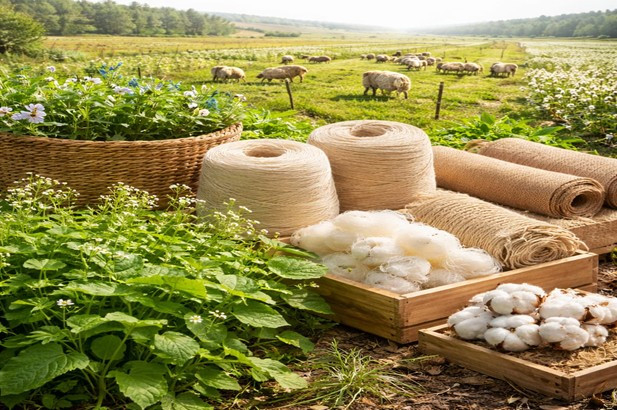
Wool in our bones
There's another way that wool has the capacity to regenerate—and this time, it all takes place in the human body. We already talked about the way wool keratin is being tested as a "scaffolding" to guide the formation of new enamel on teeth—and how promising the early results are. Now, researchers at King's College London have used this same scaffolding approach in another application: Rebuilding our very bones.
"We’ve effectively demonstrated the technology in an animal model, which makes this much more than an early materials concept. It shows that keratin can support bone regeneration in a living biological system, bringing the technology significantly closer to use in real patients."
—Dr Sherif Elsharkawy
The current gold standard for bone repair is collagen. While collagen still facilitates faster repair, the wool keratin proved to be stronger and more closely resemble human bone.
King’s College London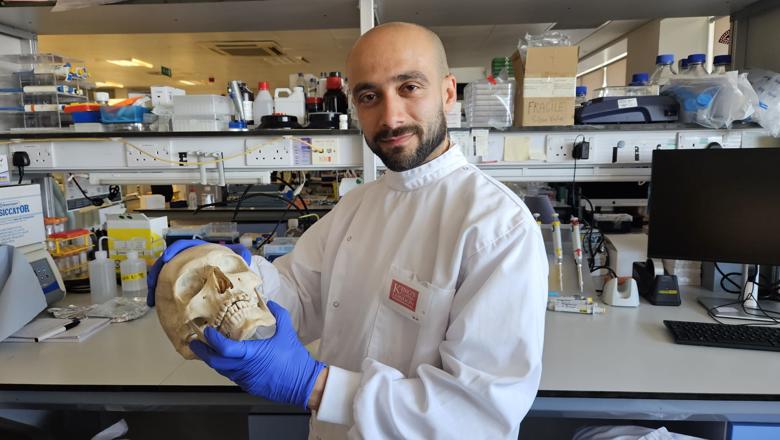
Using knitting to save us and Irish wool
When it isn't replenishing our soil or rebuilding our bones, wool can help rebuild our creativity. I loved this short, feel-good news piece about Eimear O'Neill, who is on a campaign to save Irish wool, and us in the process, by teaching people how to knit.
"In 2026, we are dealing with increased heating costs, shorter attention spans, mental health challenges, exploitative fast fashion and an Irish wool industry that has completely collapsed. Knitting touches all of these problems," Eimear said.
Hear hear!
She'll be teaching at the Organic Centre, a nonprofit organization dedicated to organic gardening, food production, and sustainable living. I love seeing craft showcased in this context.
Buried treasure
And speaking of gardening, here's a fun one for you. Made by the fine people at Woolmark, this video features a 201-day timelapse of what happens when you bury a 100% wool sweater in soil.
I'm curious if the presence of glass on one side of the sweater slowed the whole process—but, without it, we wouldn't have had any view of the process.
I'd love to see a 100% polyester sweater in a side-by-side experiment, but I think we both know how that would turn out. Still, for people who need to see to believe, this is powerful.
Graze anatomy
Speaking of seeing to believe, if you've wondered what solar grazing looks like on the ground, here's an interesting video from the American Solar Grazing Association.
It profiles Virginia sheep farmers Jess and Marcus Gray, as well as local beekeeper Allison Wickham who produces honey from the same site. Hooray for collaboration!
My favorite quote from the video: "Do we want a mowing culture, or do we want a farming culture?" If those are the choices, I'll take sheep any day.
On that note, I'll let you go.
Thanks as always for your readership and your support.
Until next time,
Clara

The Wool Channel Newsletter
Join the newsletter to receive the latest updates in your inbox.