The Wool Wire | May 28, 2026
Wool demand outpacing supply, grazing on public lands is at risk, a map of microns in the Southern Hemisphere, British wool mattresses, and pillow talk


News snippets from the wool world
Hello, my friends,
I have good news and I have not so good news. The good news is that demand for wool is spiking. More consumers are avoiding synthetic fibers and turning back towards naturally grown ones—of which wool is a main contender.
The bad news? Demand appears to be outpacing supply. Flock numbers are in decline around the world at the same moment demand is on the rise.
In a recent Marketplace podcast, Kai Ryssdal turned to Stepan Sveshnikov for a primer on the wool shortage. Sveshnikov, currently pursuing a PhD in history at Yale University, wrote about this shortage in a very helpful piece for Offrange, titled Counting Sheep.
My favorite quote from the interview is near the beginning, when Ryssdal admits total ignorance about this wool situation. Sveshnikov replies, "I'm not surprised you've missed it, but there's a group of people who's interested in wool, Kai, and I think that that group is growing."
Yes it is!
Ultimately, a wool shortage seems a good problem to have in the short term, since rebuilding flock sizes is—to a certain extent—a matter of opening the floodgates on one's breeding program. But I do worry that the promise of potential demand might invite private equity rot into our otherwise largely independent industry that has, until now, managed to fly mostly under their radar.
We shall see.
Home on the range...but for how long?
I found another interesting article on Offrange—this one exploring the nuances of the current administration's policy changes for livestock grazing on public lands in the U.S. It's a cattle-centric piece, but approximately 50% of our nation's sheep herds also graze on public lands. We need to stay current on the challenges, since they do impact us.
 Lela Nargi
Fun fact, the article was written by Lela Nargi, long-ago author of Knitting Lessons and Knitting Around the World and an old friend of mine.
The Fineness Factor
Since sheep produce different kinds of wool whose commercial value can vary widely, knowing global flock numbers only paints a portion of the big picture. Here's a fascinating breakdown of major Southern Hemisphere wool exports (namely South Africa, Australia, New Zealand, Argentina, and Uruguay) by micron, if you'd like to get a better sense of the lay of the land.
 Andrew Woods
From Bale to Bedroom
Last month I told you how wool prices in the UK were at a 70-year high. But we need to keep the champagne on ice a while longer, though, because that high still comes out to 70p to 85p per kilo—translating, at current exchange rates, to roughly $0.43 to $0.49 per pound.
With such untenable numbers, it remains important to find more uses for rougher grades of wool, and to highlight their value to a wider commercial audience. BedTimes has reported on another British mattress maker jumping into the wool fray. The Wrought Iron & Brass Bed Co. is releasing an updated mattress collection using 100% British fleece that can be traced directly "from bale to bedroom."
According to Wrought Iron & Brass Bed Co's Head of Brand Development and Marketing, "Large conglomerates in the industry base the wool’s value on the market average at the end of the year and typically do not release payment to the farmer until the farmer sends in the next clip the following year." Needless to say, this isn't always ideal for farmers.
Farmers who sign partnership agreements with Wrought Iron & Brass Bed Co., on the other hand, will get a fixed upfront price and payments after three months. The Signature Wool Mattress Collection is definitely pricey, but it comes with some reassurance that farmers got a fair deal.
 staff reports/contributors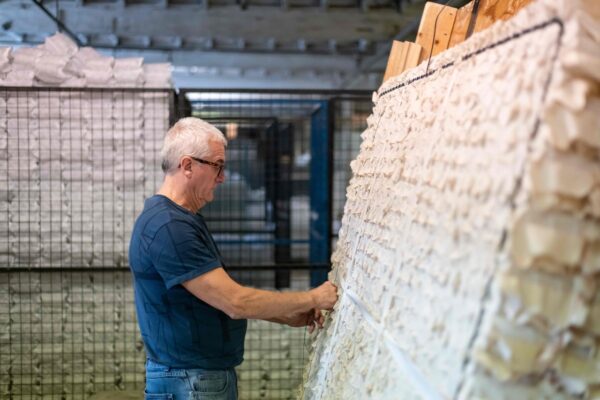
If we could see more arrangements that put the farmer first, might that be enough motivation for farmers to increase flock sizes?
Pillow Talk
My ears always perk up at the mention of wool pillows, and the Marketplace story and Offrange article both mentioned a relatively new wool small-scale domestic pillow startup in Idaho, named The Woolshire.
Another purveyor of wool pillows is Shepherds Dream, which has been operating out of the Northern California / Southern Oregon region since the 1990s. While a cotton cover is standard for most pillows on the market, Shepherds Dream offers a pillow with a plush, blanket-grade Merino cover that I'm tempted to try.
Others to explore: Skagit Woolen Works, Frankenmuth Woolen Mill, Holy Lamb Organics, Sonoma Wool Company, and the Woolroom.
As always, I have no affiliation with any of these companies, i'm just a big fan of getting a good night's sleep.
And on that note, I'll let you go.
Thanks, as always, for your readership and your support.
Until next time,
Clara

The Wool Channel Newsletter
Join the newsletter to receive the latest updates in your inbox.